AI website creation
The internet has never evolved faster than it is right now. In 2026, building a professional website no longer requires months of planning, expensive development teams, or deep coding knowledge. Thanks to rapid advances in artificial intelligence, the entire process of creating, designing, and optimizing a website has been fundamentally reimagined. AI website creation is not a buzzword anymore — it is the new standard, and businesses of every size are taking notice.
Whether you are a startup founder launching your first product, a freelancer building a portfolio, or a marketing manager overseeing a corporate rebrand, understanding how AI is reshaping the web is essential. In this guide, we’ll walk through every major area of change — from design and content to SEO and chatbots — and explain what it all means for you in plain, friendly language.
AI Web Design Is Replacing Traditional Mockups
Not long ago, the website design process looked something like this: a client would brief an agency, designers would spend weeks sketching wireframes and mockups in tools like Figma or Adobe XD, and then developers would spend even longer translating those visuals into actual code. The whole thing could take months before a single page went live.
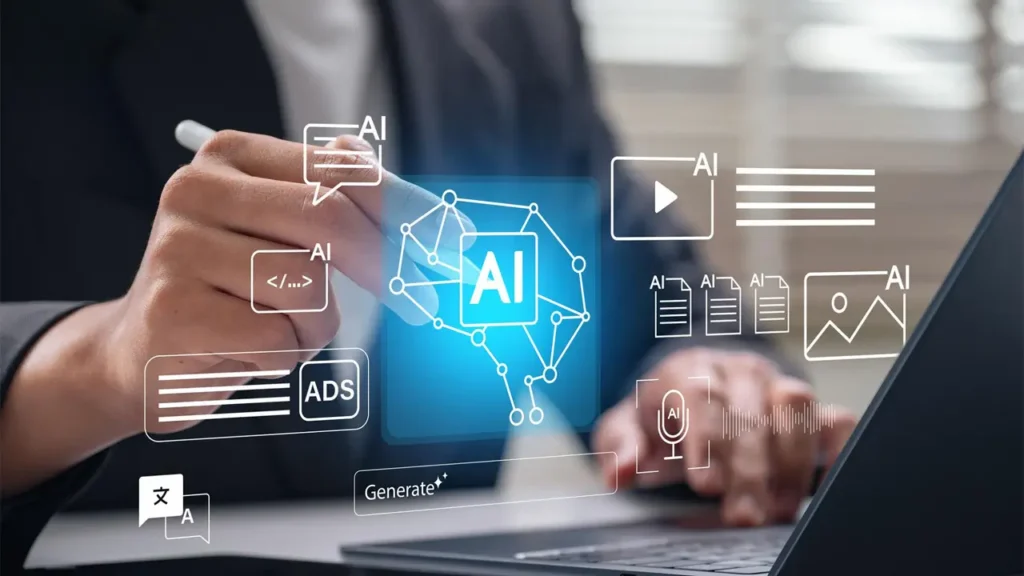
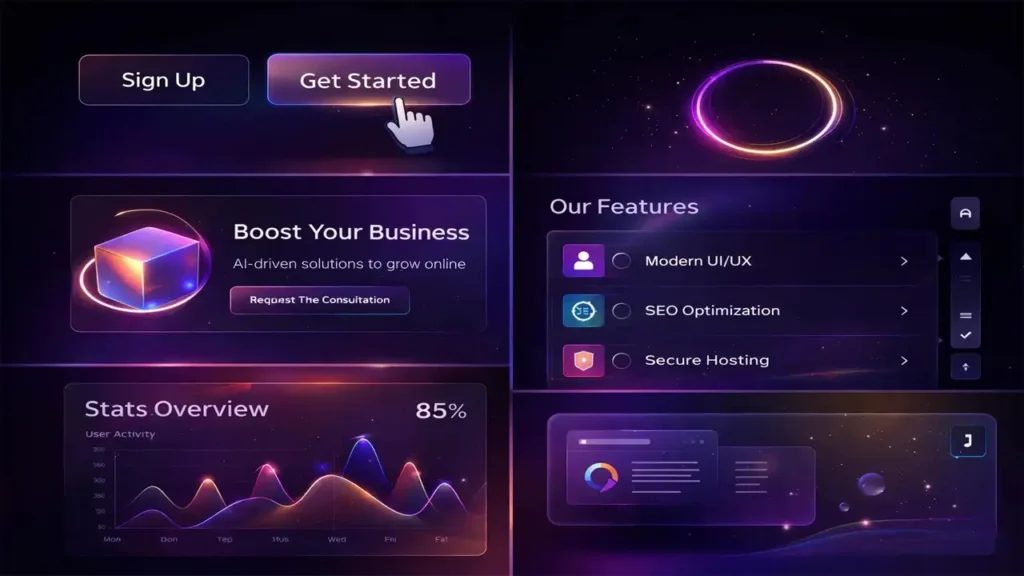
AI web design has dramatically compressed that timeline. Modern AI design tools can generate full visual layouts — color palettes, typography pairings, grid structures, and component placements — in seconds, based on a simple text prompt or a description of your business.
Tools powered by generative AI can now analyze thousands of high-performing websites across industries and apply design patterns that are statistically proven to perform well. They don’t just create something “pretty” — they create something strategically structured to engage users and guide them toward a goal, whether that’s a purchase, a sign-up, or a contact form submission.
For UI/UX professionals, this does not mean their jobs are disappearing. It means the repetitive, mechanical parts of prototyping are being handled by machines, freeing designers to focus on the creative and strategic decisions that truly require human judgment. AI handles the scaffolding; humans refine the experience.
According to data from the Nielsen Norman Group and various UX research reports published in 2025 and early 2026, AI-assisted design workflows are reducing initial prototyping time by 60 to 75 percent on average. That is not a marginal improvement — it is a wholesale transformation of how digital products are built.
AI Website Builders and No-Code Platforms
One of the most visible results of this AI revolution is the explosion of AI website builder platforms. These are tools designed to let virtually anyone — regardless of technical skill — create a professional, functional website without writing a single line of code.
What makes 2026’s AI website builders different from the drag-and-drop tools of the early 2020s is the level of intelligence behind them. Earlier no-code platforms required users to manually arrange blocks and sections. Today’s AI-powered builders ask you a few questions about your business, your goals, and your audience — and then generate a complete, customized website within minutes.
These platforms typically include:
- Automated layout generation based on your industry
- Pre-populated content tailored to your business type
- Integrated SEO structure out of the box
- Responsive mobile design without any additional configuration
- Built-in analytics and performance suggestions
For startups and small businesses, this is a game-changer. Launching a professional online presence no longer requires a $10,000 development budget. The cost barrier has dropped significantly, democratizing access to quality web design for entrepreneurs and small teams around the world.
| Feature | Traditional Builder | AI Website Builder |
|---|---|---|
| Setup Time | Days to weeks | Minutes |
| Design Customization | Manual block placement | AI-generated layouts |
| SEO Setup | Manual | Automated and integrated |
| Content Creation | User-written | AI-assisted or generated |
| Mobile Responsiveness | Requires manual adjustments | Built in automatically |
| Cost for Small Business | Medium to high | Low to medium |
Automated Content Generation for Websites
Content has always been one of the most time-consuming parts of building a website. Writing compelling landing pages, service descriptions, about pages, blog posts, and product copy requires skill, research, and hours of effort. Automated content generation powered by AI has changed this equation entirely.
Modern AI content tools can produce well-structured, readable, and contextually appropriate website copy in minutes. They analyze your input — your brand voice, target audience, industry, and goals — and generate text that is ready to use or easily customized. This is not the robotic, keyword-stuffed content of early AI experiments. The quality has improved dramatically, to the point where AI-generated content is often indistinguishable from professionally written human copy when properly guided.
For landing pages in particular, AI content generation has proven especially valuable. A well-crafted landing page needs a strong headline, compelling value proposition, clear calls to action, and trust-building elements like testimonials and guarantees. AI tools can now generate all of these components, tuned to conversion best practices, in a fraction of the time a human copywriter would take.
Blog content automation is another major area of growth. Businesses that need to publish consistently to maintain SEO visibility are using AI to generate first drafts, which human editors then review and refine. This hybrid approach — AI does the heavy lifting, humans add the nuance and brand personality — has become the industry norm for content marketing teams in 2026.
It is worth noting that Google’s official guidelines, updated in 2024 and reinforced in 2025, clarify that AI-generated content is not penalized simply for being AI-generated. What matters is whether the content is helpful, accurate, and written for humans — not for search engines. Quality and intent remain the deciding factors.

AndreevWebStudio.com
Professional web development and design services. Custom WordPress sites, landing pages, e-commerce solutions, and 3D printing content creation for businesses and creators.
- • WordPress Development
- • Custom Web Design
- • E-Commerce Solutions
- • 3D Printing Content
AI SEO Analysis Improves Google Rankings
Search engine optimization has always been a moving target. Google’s algorithm updates regularly, keyword trends shift, and what worked last year may not work today. AI SEO analysis tools have become invaluable for keeping websites competitive in this constantly changing environment.
AI-powered SEO platforms can now perform real-time analysis of your website, comparing it against top-ranking competitors, identifying content gaps, and suggesting specific improvements across hundreds of ranking factors simultaneously. This is a level of analysis that would have taken a human SEO specialist days to perform manually — and the AI does it in seconds.
Some of the most impactful AI SEO capabilities in 2026 include:
Keyword clustering and semantic SEO. Rather than targeting individual keywords in isolation, AI tools group related terms into topic clusters that reflect how Google’s language models understand content. This approach aligns with Google’s emphasis on topical authority and helps websites rank for broader topic areas rather than just single phrases.
Automated internal linking suggestions. AI can map your site’s content and recommend internal links that improve both user navigation and search crawlability, two factors that directly impact rankings.
Content scoring and optimization. Tools like Clearscope, Surfer SEO, and similar platforms use AI to score your content against the top-ranking pages for any given query and tell you exactly what topics, subtopics, and entities you need to include to be competitive.
Technical SEO auditing. AI tools can scan a website’s technical infrastructure — page speed, structured data, Core Web Vitals, crawl errors, and more — and prioritize fixes by their likely impact on rankings.
| SEO Task | Manual Approach | AI-Powered Approach |
|---|---|---|
| Keyword Research | Hours of spreadsheet work | Instant clustering and gap analysis |
| Competitor Analysis | Manual review of top pages | Automated multi-site comparison |
| Content Optimization | Guess-based adjustments | Data-driven scoring and suggestions |
| Technical Audit | Slow and incomplete | Comprehensive and prioritized |
| Reporting | Weekly manual reports | Real-time dashboards and alerts |
Chatbot Integration for Websites Is Becoming Standard
A few years ago, live chat widgets were a nice-to-have feature for eCommerce and SaaS companies. In 2026, chatbot integration for websites has become an expectation rather than an exception — and the intelligence behind these bots has advanced enormously.
Modern AI chatbots are no longer the frustrating, scripted conversation trees of the past. Powered by large language models, they can understand natural language, answer complex product questions, guide users through processes, qualify leads, book appointments, and escalate to human agents when needed — all without any manual intervention from your team.
For businesses, the benefits are substantial. AI chatbots are available 24 hours a day, 7 days a week, in multiple languages. They never miss a lead that arrives outside business hours. They reduce the burden on customer support teams by handling routine inquiries automatically. And they provide a consistent brand experience every single time.
From a conversion standpoint, well-implemented chatbots have been shown to increase lead generation rates significantly. According to Drift’s 2025 State of Conversational Marketing report, companies using AI-powered chat on their websites report an average 30 percent increase in qualified leads compared to those relying solely on static contact forms.
The integration of chatbots is also becoming simpler. Most AI website builders now include chatbot functionality as a built-in feature, and standalone chatbot platforms can be embedded into almost any existing website with minimal technical effort. The barrier to adoption has never been lower.
AI Page Structure Generation and UX Optimization
One of the less talked about but highly impactful applications of AI in web development is AI page structure generation. This refers to the ability of AI systems to analyze a business’s goals and automatically recommend — or even generate — the optimal layout and hierarchy for individual web pages.
Effective page structure is critical for both user experience and conversions. Research in conversion rate optimization consistently shows that how information is arranged on a page matters as much as the information itself. Where you place your call to action, how you sequence your value propositions, what social proof elements appear and in what order — all of these decisions affect how many visitors take action.
AI tools trained on conversion data can now make these structural decisions intelligently. They analyze patterns from thousands of high-converting pages and apply those insights to new pages being built. This is particularly valuable for landing pages, product pages, and service pages where conversion is the primary goal.
UX optimization doesn’t stop at launch, either. AI tools continue to monitor page performance after publication, using heatmap data, scroll behavior, click patterns, and A/B test results to suggest further improvements. This creates a continuous improvement loop that makes your website smarter over time — without requiring a full redesign every few years.
AI Tools for Web Development Accelerate Production
Beyond design and content, AI tools for web development are transforming how actual code gets written, tested, and deployed. This is having a profound effect on how development teams work and how quickly digital products reach the market.
AI coding assistants — tools that suggest code completions, generate functions from natural language descriptions, and explain existing code in plain English — have become standard in professional development environments. According to a 2025 developer survey by Stack Overflow, more than 70 percent of professional developers now use AI coding assistance regularly, with the majority reporting meaningful productivity gains.
These tools reduce the time spent on repetitive boilerplate code, help junior developers tackle more complex tasks with guidance, and allow senior developers to focus on architecture and problem-solving rather than routine implementation. The net effect is faster production cycles and fewer bottlenecks.
Automated testing is another area where AI is making a significant impact. AI-powered testing frameworks can generate test cases automatically, identify edge cases that human testers might miss, and run comprehensive regression tests in a fraction of the time. This improves code quality while reducing the manual effort required from QA teams.
Performance optimization is also being automated. AI tools can analyze a live website and recommend — or in some cases implement — changes to improve page load speed, reduce resource consumption, and improve Core Web Vitals scores, which directly affect both user experience and search rankings.
| Development Area | AI Tool Contribution | Time Saved (Estimate) |
|---|---|---|
| Code Writing | Autocomplete and generation | 30–55% |
| Debugging | Error detection and explanation | 40–60% |
| Testing | Automated test generation | 50–70% |
| Documentation | Auto-generated from code | 60–80% |
| Performance Optimization | Automated analysis and fixes | 25–45% |
The Future of Web Design and Smart Website Automation
Looking ahead, the trajectory of AI in web design points toward something even more ambitious: fully adaptive, intelligent websites that change in real time based on who is visiting them.
Smart website automation refers to the use of AI to automate not just the creation of a website, but its ongoing operation and personalization. Websites that can recognize returning visitors, adapt content based on user behavior, change layouts based on device and context, and serve personalized product recommendations or calls to action — all without human intervention — are already emerging in 2026, and they will become mainstream within the next few years.
Predictive personalization is one of the most exciting frontiers here. Using behavioral data, AI can predict what a visitor is likely to be interested in based on how they arrived at the site, what they have browsed before, their geographic location, and dozens of other signals. The website then dynamically adjusts to surface the most relevant content for that specific individual.
Adaptive interfaces take this further. Rather than presenting every visitor with the same fixed layout, adaptive interfaces rearrange components, adjust navigation depth, and even change visual complexity based on what the AI determines will work best for each user segment. A first-time visitor from a mobile device might see a simplified, action-oriented layout, while a returning customer might see a richer interface with account-specific content.
These capabilities are not science fiction. They are being deployed today by leading eCommerce platforms, SaaS companies, and enterprise websites. And as the underlying AI technology continues to mature and the tools to implement it become more accessible, they will trickle down to websites of all sizes.
Why Businesses Still Need Professional Developers
With all of this AI capability, you might be wondering: does any of it require human expertise anymore? The honest and important answer is yes — absolutely and more than ever.
Here is the key insight that often gets lost in the excitement around AI tools: artificial intelligence is extraordinarily good at processing patterns, generating options, and accelerating repetitive tasks. It is not good at understanding your specific business, your customers’ emotional needs, your brand’s unique voice, or the strategic decisions that differentiate you from competitors.
A professional web developer or digital agency brings things that no AI tool can replicate:
Strategic thinking. Understanding your business goals at a deep level and translating them into a website architecture that serves those goals requires human judgment and experience.
Brand authenticity. Your website should feel like your brand — not like a generic template or an AI approximation of your industry. Achieving that requires human creative involvement.
Custom functionality. Complex integrations, custom applications, unique interactive features, and bespoke back-end systems still require skilled developers who can solve novel problems.
Quality assurance and accountability. A professional developer takes responsibility for what they build. They test it thoroughly, ensure it performs across devices and browsers, and are there to fix problems when they arise.
Ongoing strategy. A website is not a one-time project. It is a living platform that needs to evolve with your business. Professional developers and digital agencies provide the ongoing strategic guidance that keeps your site aligned with your goals.
The most successful businesses in 2026 are not choosing between AI and professional expertise. They are combining both. They use AI tools to accelerate and enhance the work, while relying on skilled human professionals to provide the strategy, creativity, and accountability that produces genuinely outstanding results.
If you are building or rebuilding a website and want to take full advantage of everything AI has to offer while ensuring the result truly represents your business at its best, working with a professional web studio that understands both traditional and AI-powered development is the smartest investment you can make. Teams like Andreev Web Studio specialize in exactly this combination — bringing deep technical skill together with modern AI-powered workflows to deliver websites that perform at the highest level.
Conclusion
AI website creation has moved from a novelty to a necessity in 2026. Every major aspect of the web design process — from initial design and content generation to SEO analysis, chatbot integration, page structure, and development — has been touched by artificial intelligence. The tools are faster, smarter, and more accessible than ever before.
But the story of AI in web design is not one of replacement. It is one of enhancement. The businesses that will thrive are those that embrace AI’s capabilities while pairing them with the irreplaceable value of human expertise, strategic thinking, and creative vision.
Understanding these tools and trends is the first step. Knowing how to apply them intelligently — and when to bring in the right professional support — is what turns that understanding into results.
The future of web design is already here. The question is whether your website is ready for it.
AndreevWebStudio.com
Professional web development and design services. Custom WordPress sites, landing pages, e-commerce solutions, and 3D printing content creation for businesses and creators.
- • WordPress Development
- • Custom Web Design
- • E-Commerce Solutions
- • 3D Printing Content
🇬🇧 “Excellent arti🇬🇧 “This article about AI changing website creation in 2026 was incredibly insightful. I loved the sections about AI web design, SEO automation, and chatbot integration. The website itself looks modern, fast, and highly professional. Definitely worth reading for anyone building an online business.
Visit: Andreev Web Studio”
🇪🇸 “Un artículo excelente sobre cómo la inteligencia artificial está revolucionando la creación de sitios web en 2026. La explicación sobre SEO con IA y automatización web fue muy útil. El sitio tiene un diseño moderno y profesional.
Visita: Andreev Web Studio”
🇸🇦 “مقال رائع ومفيد جدًا حول تأثير الذكاء الاصطناعي على تطوير المواقع في عام 2026. أعجبتني المعلومات عن تحسين محركات البحث باستخدام الذكاء الاصطناعي وروبوتات الدردشة. الموقع احترافي وسريع وسهل التصفح.
زيارة الموقع: Andreev Web Studio”
🇨🇳 “这篇关于人工智能如何改变2026年网站建设的文章非常专业。AI SEO分析、自动内容生成以及聊天机器人部分尤其令人印象深刻。网站设计现代、运行流畅,非常值得推荐。
访问网站:Andreev Web Studio”
🇫🇷 “Article très intéressant sur la façon dont l’intelligence artificielle transforme la création de sites web en 2026. Les conseils sur le SEO automatisé et les outils IA sont excellents. Le site est rapide, élégant et professionnel.
Visitez : Andreev Web Studio”
🇩🇪 “Ein sehr moderner und informativer Artikel darüber, wie KI die Website-Erstellung im Jahr 2026 verändert. Besonders spannend waren die Themen automatisiertes SEO und intelligente Chatbots. Die Website wirkt professionell und vertrauenswürdig.
Besuchen Sie: Andreev Web Studio”