
Let’s be honest — when did you last really look at your website the way a brand-new visitor would?
Not as the business owner who built it, knows every page, and understands the navigation instinctively. But as a stranger landing on your homepage for the very first time, on a phone, with zero patience and plenty of other options just one tap away.
If your honest answer is “it’s been a while,” you’re not alone. Thousands of businesses across every industry are quietly bleeding customers every single day because of an outdated website — and most of them don’t even realize it’s happening. There’s no alarm that goes off. No error message. Customers simply arrive, feel confused or unimpressed, and leave. Often forever.
In 2026, your website isn’t just a digital business card. It’s your storefront, your sales team, your first impression, and your most powerful marketing tool — all rolled into one. And just like a physical store, if it’s dusty, hard to navigate, or feels stuck in a different decade, people will walk right past it.
This article breaks down the five most critical reasons an outdated website is costing your business real money — and what you can do about it.
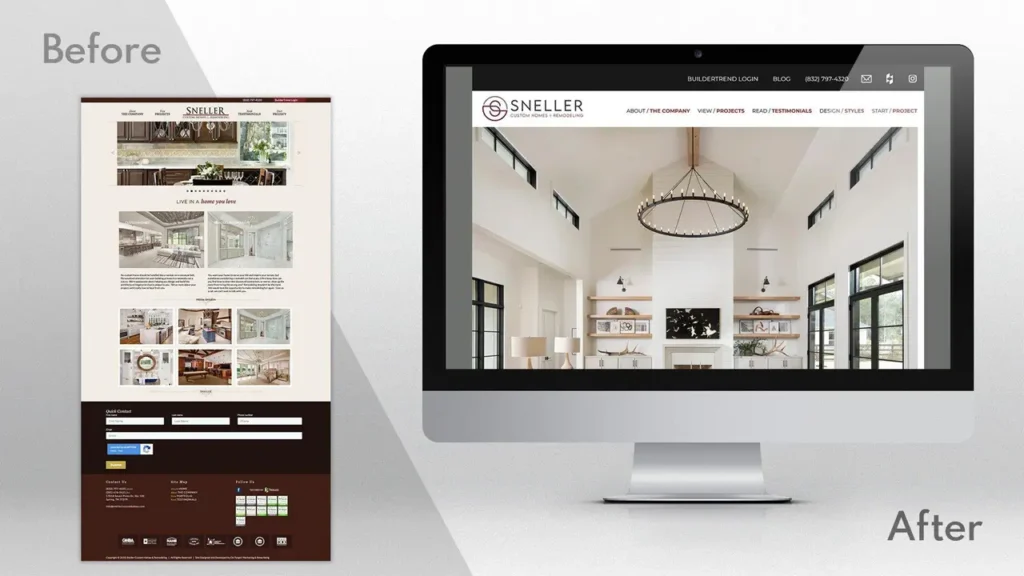
First Impressions Are Made in Milliseconds — And Outdated Web Design Fails Instantly
You’ve probably heard that first impressions matter. But did you know just how fast they happen online?
According to research published by Google, users form a visual impression of a website in as little as 50 milliseconds — that’s 0.05 seconds. In that tiny window, a visitor has already begun to judge whether your business looks trustworthy, professional, and worth their time.
Outdated web design works against you from the very first frame. Think about what signals “old” to a modern web user: crowded layouts with no breathing room, clashing colors from early design trends, stock photos that look like they were taken in 2009, fonts that haven’t been fashionable since Internet Explorer was the dominant browser, and navigation menus that require actual thinking to use.
Stanford University’s Web Credibility Research found that 75% of users admit to making judgments about a company’s credibility based on its website design. That means three out of every four people visiting your site are using visual design cues to decide whether to trust you — before they’ve read a single word of your content.
And trust, once lost at first glance, is extremely hard to recover within the same visit.
The psychological effect here is called the “halo effect.” When a website looks modern, clean, and professional, visitors unconsciously extend that positive impression to the business itself — assuming it’s competent, reliable, and current. When a website looks outdated and neglected, the opposite happens. Visitors assume the business may also be behind the times in its products, services, or customer care.
A modern website design doesn’t just look better. It works harder for you every single second it’s live.
Your Website Isn’t Mobile-Friendly — And That’s a Business Emergency
Here’s a number that should stop you in your tracks: as of 2024, mobile devices account for approximately 60% of all global web traffic, according to Statista. In many industries — retail, hospitality, local services — that number climbs even higher.
If your website isn’t a genuinely mobile-friendly website, you are actively turning away the majority of your potential customers before they ever get a chance to learn what you offer.
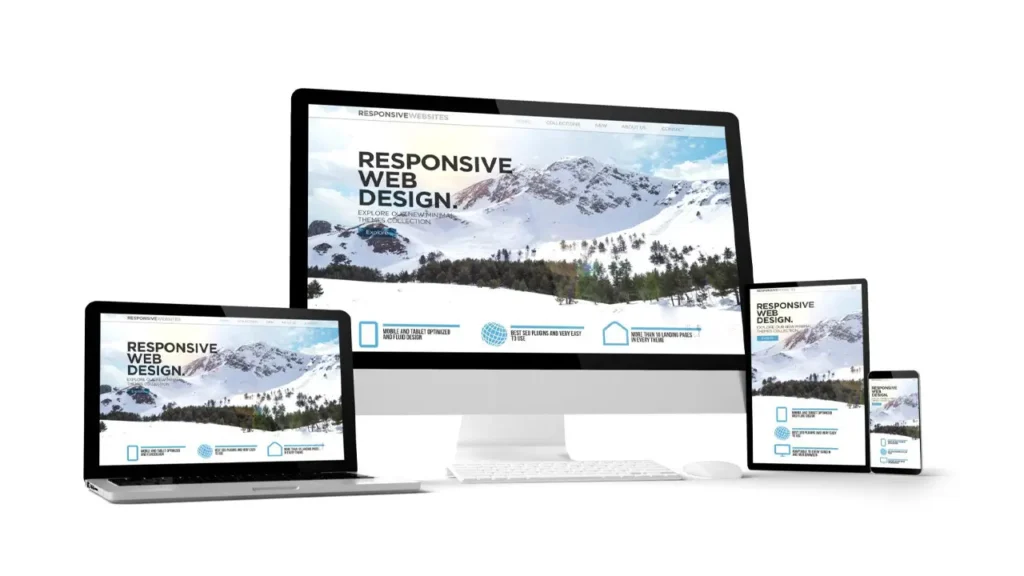
What does “not mobile-friendly” actually look like in practice? It means visitors on smartphones see text so small they have to pinch and zoom just to read it. Buttons that are too close together and impossible to tap accurately with a finger. Images that overflow the screen or break the layout entirely. Navigation menus designed for a mouse cursor that become unusable on a touchscreen. Forms that require scrolling sideways to complete.
Every one of these friction points is a reason for a visitor to give up and go to a competitor whose site works perfectly on their phone.
Responsive website design — the technical approach that makes a website automatically adapt its layout to any screen size — has been an industry standard for years. The fact that it’s still missing from so many business websites in 2026 is genuinely surprising, and genuinely costly.
| Device Type | Share of Web Traffic (2024) | Source |
|---|---|---|
| Mobile (smartphones) | ~60% | Statista, 2024 |
| Desktop | ~37% | Statista, 2024 |
| Tablet | ~3% | Statista, 2024 |
Beyond the user experience problem, there’s a direct SEO consequence. Google switched to mobile-first indexing, meaning it primarily uses the mobile version of your website to determine your search rankings. A site that isn’t built with responsive website design isn’t just inconvenient for mobile users — it actively ranks lower in Google search results, reducing your visibility to everyone, including desktop users.
The bottom line: in 2026, a mobile-friendly website isn’t a luxury upgrade. It’s the minimum standard for being competitive online.
H2: Slow Website Loading Is Silently Killing Your Sales
Speed is everything on the web. Not metaphorically — literally.
Google’s own research has established clear, alarming benchmarks: as page load time increases from 1 second to 3 seconds, the probability of a mobile user bouncing (leaving immediately without interacting) increases by 32%. From 1 second to 5 seconds, that bounce probability jumps by 90%. From 1 second to 10 seconds, it rises by a staggering 123%.
Slow website loading doesn’t just frustrate visitors. It drives them directly to your competitors.
Why do websites become slow over time? Several common reasons apply to businesses with older sites. Images that were uploaded without compression add massive file sizes to every page load. Outdated plugins and scripts that haven’t been maintained conflict with each other and slow down rendering. Old hosting infrastructure that hasn’t been upgraded struggles with modern web traffic. Accumulated code bloat from years of small edits and additions creates a tangled mess that browsers take longer to process.
| Page Load Time | Bounce Rate Increase | Source |
|---|---|---|
| 1s → 3s | +32% | Google/SOASTA Research |
| 1s → 5s | +90% | Google/SOASTA Research |
| 1s → 10s | +123% | Google/SOASTA Research |
The business impact extends beyond individual lost visits. Google’s Core Web Vitals — a set of specific performance metrics that Google uses as ranking signals — measure load speed, visual stability, and interactivity. A site with poor Core Web Vitals scores is penalized in search rankings, meaning fewer organic visitors reach your site in the first place.
Improving website performance isn’t just a technical exercise. It’s a revenue-generating activity. According to a case study published by Walmart (cited by Google), every 1-second improvement in load time resulted in a 2% increase in conversions. For an e-commerce business doing significant volume, that’s a massive difference. For a local service business, faster loading means more enquiries, more calls, and more booked appointments.
A business website redesign done properly addresses speed at the architectural level — not as an afterthought, but as a foundational design principle.
Poor User Experience Makes Customers Leave Before They Contact You
Imagine walking into a shop where nothing is where you’d expect it to be. The products have no labels. The checkout counter is hidden somewhere in the back. There are no staff visible, no signs, and the lighting makes everything look vaguely ominous. You’d leave immediately, right?
That’s exactly what poor user experience (UX) feels like on a website. And it’s one of the most common problems with outdated websites that businesses overlook because they’re too familiar with their own site to see its problems clearly.
Poor user experience on websites typically shows up in several interconnected ways. Navigation that isn’t intuitive forces visitors to hunt for information they expect to find instantly — your phone number, your services, your location, your pricing. Walls of dense text without clear visual hierarchy make it impossible to scan quickly, which is how all web users actually read online. Broken links and 404 error pages destroy trust and create dead ends. Contact forms with too many fields feel like homework. Pages that scroll endlessly with no clear purpose or destination exhaust visitors and send them away empty-handed.
The Nielsen Norman Group, a globally recognised UX research organisation, has studied web usability for decades. Their research consistently shows that users spend very little time deciding whether to stay on a page — and that websites which don’t immediately communicate their value and make the next step obvious lose visitors at a dramatically higher rate.
Here’s the frustrating irony: you may have an excellent product or service. Your pricing might be competitive. Your team might be outstanding. But if the website experience is confusing or exhausting, visitors will never get far enough to discover any of that. They’ll simply assume the experience of working with your business will be as frustrating as navigating your website, and they’ll go elsewhere.
A business website redesign focused on UX isn’t about aesthetics for their own sake. It’s about removing every possible barrier between a visitor arriving on your site and them taking the action you want — calling, booking, buying, or enquiring.
| UX Problem | Business Impact |
|---|---|
| Confusing navigation | Visitors can’t find key info → they leave |
| No visual hierarchy | Content isn’t scannable → key messages are missed |
| Broken links/errors | Trust is destroyed instantly |
| Overcomplicated forms | Enquiry rate drops significantly |
| No clear next step | Visitors leave without converting |
Missing Clear Calls to Action and Why Google Rewards Modern Websites
These two issues — weak calls to action and poor SEO performance — are closely linked, and together they represent the difference between a website that generates business and one that’s simply occupying digital space.
The Call to Action Problem
A call to action (CTA) is any element on your website that prompts a visitor to take a specific next step: “Get a Free Quote,” “Book a Consultation,” “Call Us Now,” “Download the Guide,” “Shop the Collection.” Every page of your website should have at least one clear, compelling CTA — and on your most important pages, it should be impossible to miss.
On many outdated websites, CTAs are either absent entirely, buried deep below the fold where most visitors never scroll, written in vague language that doesn’t inspire action (“Click Here,” “Submit”), or styled so poorly that they don’t visually stand out from the surrounding content.
Website conversion optimization is the practice of systematically improving the elements of your website — including CTAs — to increase the percentage of visitors who take a desired action. According to HubSpot’s research, personalised CTAs perform 202% better than generic ones. Even basic improvements to CTA placement, wording, and design can dramatically increase conversion rates without changing anything else about your marketing or traffic levels.
Think about what that means practically. If your website currently converts 1% of visitors into enquiries, and a redesign with optimised CTAs brings that to 3%, you’ve tripled your leads without spending an additional cent on advertising.
Why Google Rewards Modern Websites
Google’s mission, as stated in their own documentation, is to organise the world’s information and make it universally accessible and useful. In pursuit of that mission, their search algorithm consistently favours websites that provide a genuinely good experience for users.
What does that mean for your rankings? Responsive website design is a confirmed ranking factor — Google has stated this directly in their developer documentation. Core Web Vitals (loading speed, interactivity, visual stability) are used as ranking signals. HTTPS security is required for trust signals. Mobile usability affects how your pages are indexed and ranked.
An outdated website that fails on these technical criteria doesn’t just deliver a poor experience — it actively falls behind in search results, handing visibility to competitors whose modern websites meet Google’s standards.
| Google Ranking Factor | How Outdated Sites Are Penalised |
|---|---|
| Mobile-first indexing | Non-responsive sites rank lower across all devices |
| Core Web Vitals | Slow, unstable pages receive lower rankings |
| HTTPS / Security | HTTP sites flagged as “not secure” by browsers |
| Page experience signals | Poor UX metrics reduce search visibility |
Your Competitors Are Already Ahead — Here’s What That Costs You
While you’ve been putting off the website redesign, your competitors have been investing in theirs. And in the digital space, the competitor with the better website doesn’t just win one customer — they win every customer who searches your service category online and lands on their site first.
A modern, fast, mobile-friendly website with clear calls to action doesn’t just look better. It ranks higher in search results. It holds visitors’ attention longer. It converts a higher percentage of those visitors into enquiries. And it builds the kind of trust that makes people choose that business over yours — even when your actual service might be superior.
The longer you wait, the wider that competitive gap becomes. Customers who have already visited your competitor’s clean, modern site and had a positive experience are unlikely to return to give your outdated website a second chance.

AndreevWebStudio.com
Professional web development and design services. Custom WordPress sites, landing pages, e-commerce solutions, and 3D printing content creation for businesses and creators.
- • WordPress Development
- • Custom Web Design
- • E-Commerce Solutions
- • 3D Printing Content
Website Conversion Optimization Changes Everything — Here’s the Proof
Let’s bring this all together with a clear-eyed look at what conversion optimization actually means for your bottom line.
Website conversion optimization is the practice of designing and continuously refining your website so that a higher percentage of visitors take the action you want. It combines everything we’ve discussed — fast loading, mobile responsiveness, intuitive UX, compelling CTAs, modern design — into a cohesive strategy focused on one outcome: turning visitors into customers.
The numbers speak for themselves. According to data from Unbounce and various published industry studies:
- The average website conversion rate across industries hovers around 2–5%
- Websites that invest in professional design and UX improvements regularly achieve conversion rates of 5–10% or higher
- Even a 1% improvement in conversion rate, depending on your traffic volume, can represent tens of thousands of additional euros or pounds in annual revenue
For most businesses, the investment in a professional business website redesign pays for itself within months, purely through the increased volume of leads and sales that a better-performing website generates.
| Metric | Outdated Website | Modern Optimised Website |
|---|---|---|
| Monthly visitors | 1,000 | 1,000 |
| Conversion rate | 1% | 4% |
| Monthly leads/enquiries | 10 | 40 |
| Annual leads/enquiries | 120 | 480 |
The table above uses conservative numbers — but the principle holds regardless of your traffic volume. More conversions from the same traffic is the most cost-efficient growth lever available to most small and medium-sized businesses.
It’s Time to Improve Website Performance and Invest in a Modern Website Design
So where does that leave you?
If your website is more than 3–4 years old, there’s a strong chance it’s already falling short on at least several of the factors we’ve covered. It may not be fully responsive for mobile users. It may be loading too slowly for today’s standards and Google’s Core Web Vitals thresholds. It may have a design that signals “old” and “untrustworthy” in those crucial first milliseconds. It may be missing the clear, compelling calls to action that guide visitors toward becoming customers. And it may be quietly handing organic search visibility to competitors who have already invested in modern, optimised websites.
None of these are permanent problems. They’re all fixable. But they do require a genuine commitment to treating your website as a business asset — not a one-time project you set up years ago and occasionally log into to change a phone number.
A professional business website redesign in 2026 means:
- Building on a modern, responsive framework that works beautifully across every device and screen size
- Optimising page speed from the ground up, so your site meets and exceeds Google’s Core Web Vitals standards
- Designing with user experience at the centre — clear navigation, visual hierarchy, and intuitive pathways to conversion
- Incorporating strategically placed calls to action that guide visitors toward enquiring, booking, or buying
- Creating a visual identity that communicates professionalism, credibility, and trust at first glance
- Building with SEO best practices embedded throughout — not bolted on as an afterthought
This isn’t about chasing trends or redesigning for redesign’s sake. It’s about building a website that genuinely works as a business development tool — one that brings in leads, earns trust, converts visitors, and supports your growth month after month.
Conclusion — Your Website Is Either Working For You or Against You
There’s no neutral ground when it comes to your business website in 2026. Every day that passes with an outdated, slow, non-mobile-friendly website is a day that potential customers are landing on your site, forming a negative impression, and choosing someone else.
The good news is that this is entirely within your control. The investment in a modern, professionally built website isn’t a cost — it’s one of the highest-return investments most businesses can make, delivering improved visibility, more leads, stronger trust, and better conversion rates for years to come.
If you’re ready to stop losing customers to an outdated website and start turning your online presence into a genuine competitive advantage, the team at Andreev Web Studio specialises in professional business website redesigns built for performance, modern design, and real-world results. Whether you’re starting from scratch or upgrading an existing site, the focus is always on building something that looks exceptional, loads fast, works perfectly on every device, and converts visitors into customers.
Your website should be your hardest-working team member. It’s time to make sure it’s actually doing its job.
Your website should work as a sales machine — not a digital museum piece.
If your business still uses an outdated website, now is the perfect time to upgrade.
Professional redesign, SEO optimization, fast performance, and conversion-focused UX:
https://andreevwebstudio.com
🇬🇧 Excellent article and very professional website!
The comparison between outdated and modern websites was extremely helpful. Clear explanations, modern design examples, and practical SEO advice. Definitely recommended for business owners who want more clients online.
👉 Visit: www.andreevwebstudio.com
🇪🇸 ¡Artículo excelente y sitio web muy profesional!
La explicación sobre cómo un sitio web antiguo puede afectar las ventas fue muy clara. Me gustaron especialmente los consejos sobre velocidad, UX y diseño adaptable. Muy recomendable para cualquier negocio moderno.
👉 Visita: www.andreevwebstudio.com
🇸🇦 مقال رائع وموقع احترافي للغاية!
المحتوى كان مفيدًا جدًا لفهم كيف يمكن للموقع القديم أن يؤدي إلى خسارة العملاء. التصميم حديث والمعلومات واضحة ومناسبة لأصحاب الأعمال. أنصح به بشدة.
👉 زيارة الموقع: www.andreevwebstudio.com
🇨🇳 非常专业的网站和高质量的文章!
这篇文章很好地解释了为什么过时的网站会失去客户。我特别喜欢关于移动端优化和SEO的部分。内容实用、设计现代,非常值得推荐。
👉 访问网站:www.andreevwebstudio.com
🇫🇷 Article très utile et site web impressionnant !
Les explications sur le design moderne, la vitesse du site et l’expérience utilisateur étaient excellentes. Le contenu est clair, professionnel et vraiment pertinent pour les entreprises modernes.
👉 Visitez : www.andreevwebstudio.com
🇩🇪 Sehr informativer Artikel und modernes Webdesign!
Der Beitrag erklärt perfekt, warum veraltete Websites Kunden verlieren. Besonders die Tipps zu SEO, Ladegeschwindigkeit und responsivem Design waren sehr hilfreich. Absolut empfehlenswert.
👉 Besuchen Sie: www.andreevwebstudio.com