
If you’ve ever searched for website development cost, you’ve probably noticed something puzzling: prices range from $200 to $200,000 depending on who you ask. That’s not a typo. The same product — a website — can cost a few hundred dollars or rival the price of a luxury car. Why such a massive gap?
The answer comes down to what you’re actually building, who’s building it, and what goals you want it to achieve. A simple one-page brochure site is a very different product from a multi-language e-commerce platform with custom integrations, animations, and real-time inventory management. And yet both are technically “websites.”
This guide breaks down everything you need to know about website pricing in 2026 — from landing pages to corporate sites to full e-commerce stores. You’ll learn what drives costs up or down, what’s often forgotten in budgeting, and why spending a little more upfront on quality development almost always pays off in the long run.
Let’s start from the beginning.

What Is Actually Included in Website Development?
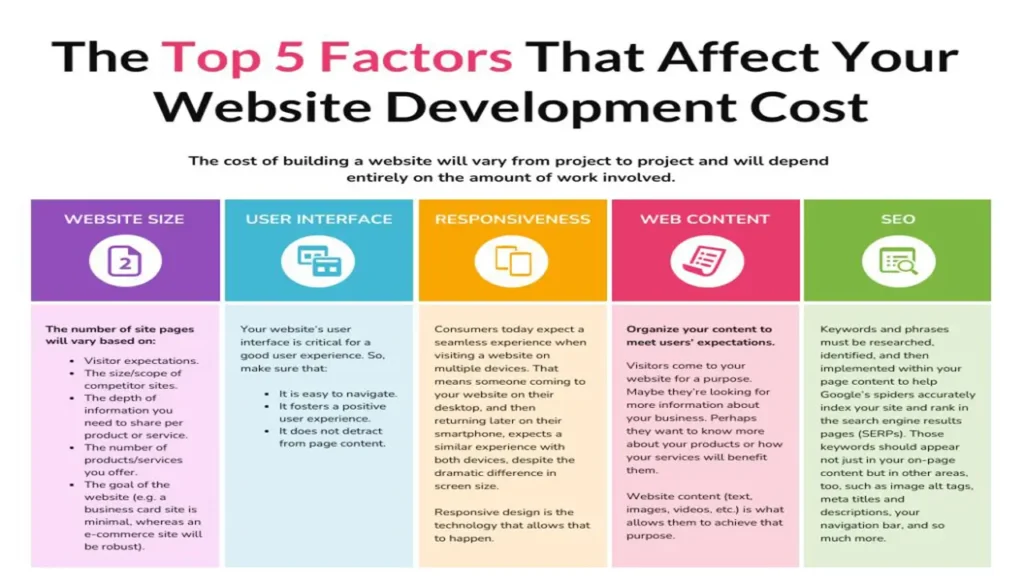
Before comparing price tags, it helps to understand what website design pricing actually covers. Many business owners are surprised to discover that a website isn’t just a collection of pretty pages — it’s a system of interconnected components, each one contributing to performance, visibility, and user experience.
Here’s what professional website development typically includes:
UI/UX Design — This is the visual and structural layer of your website. UI (User Interface) refers to buttons, colors, typography, and layout. UX (User Experience) is about how visitors move through your site, how intuitive it feels, and how likely they are to take action. Good UX design is the difference between a site that converts and one that frustrates.
Mobile Responsiveness — As of 2024, over 60% of global web traffic comes from mobile devices, according to Statista. A website that doesn’t adapt beautifully to smartphones and tablets is not just inconvenient — it actively hurts your business. Google also uses mobile-first indexing, meaning your mobile experience directly affects search rankings.
SEO Optimization — Building a site without SEO is like opening a store in the middle of a forest with no road leading to it. SEO (Search Engine Optimization) ensures your website is structured so that Google and other search engines can find, read, and rank it. This includes metadata, heading structure, image optimization, URL formatting, and site speed.
CMS Integration — A Content Management System (like WordPress, Webflow, or Shopify) allows you to update your website without needing a developer every time. This is a standard expectation in modern web development.
Hosting and Domain Setup — Your website needs a home on the internet. Hosting costs vary widely based on server quality and traffic expectations. Some agencies include this in their packages; others don’t.
Speed Optimization — Google’s own research shows that 53% of mobile users abandon pages that take longer than 3 seconds to load. Speed isn’t just a convenience — it’s a ranking factor and a conversion factor.
Security — SSL certificates, firewall setups, malware scanning, and regular backups protect your website and your users. For e-commerce sites handling payment data, this is non-negotiable.
All of these elements influence the final price. When you see a quote for $500, you’re likely getting some of these — not all. When you see a quote for $5,000 or $15,000, you’re getting a more complete, more reliable solution.

AndreevWebStudio.com
Professional web development and design services. Custom WordPress sites, landing pages, e-commerce solutions, and 3D printing content creation for businesses and creators.
- • WordPress Development
- • Custom Web Design
- • E-Commerce Solutions
- • 3D Printing Content
Landing Page Price — Simple Structure, Focused Purpose
A landing page is the most affordable type of website you can commission — and it’s also one of the most powerful when used correctly.
Unlike a full website, a landing page is a single page with one goal: to convert visitors into leads or customers. There’s no navigation menu pulling people away, no blog sidebar to scroll through. Everything on the page — the headline, the copy, the visuals, the call to action — points toward one outcome.
Typical landing page price range:
| Landing Page Type | Estimated Cost | Typical Turnaround |
|---|---|---|
| Template-based, basic | $200–$800 | 3–7 days |
| Custom design, optimized | $800–$2,500 | 1–2 weeks |
| High-conversion, A/B tested | $2,500–$6,000+ | 2–4 weeks |
Landing pages are ideal for:
- Paid advertising campaigns (Google Ads, Facebook Ads)
- Product launches and limited-time promotions
- Lead generation for a specific service
- Event registrations or webinar sign-ups
Because the scope is narrow, development time is shorter — which keeps costs down. However, don’t mistake “simpler” for “unimportant.” A well-designed landing page with strong copy and a clear call to action can generate enormous ROI, especially when paired with targeted ad traffic.
The key word here is effective. A landing page that looks pretty but doesn’t convert is just an expensive image. When commissioning one, ask specifically about conversion rate optimization (CRO) practices, mobile performance, and load speed — these details make the real difference.
Corporate Website Cost — Building Brand Authority Online
If a landing page is a focused sprint, a corporate website is a marathon. It’s your company’s full digital presence — a place where potential clients, partners, and employees come to understand who you are, what you offer, and why they should trust you.
Corporate websites typically include multiple pages: a homepage, about us, services or solutions, case studies or portfolio, team bios, blog, contact page, and sometimes a client portal or resource library. The more pages, the more design work, development work, and content needed — all of which affects the corporate website cost.
Typical corporate website cost range:
| Corporate Site Type | Estimated Cost | Pages (approx.) |
|---|---|---|
| Small business site (template) | $1,000–$3,000 | 5–8 pages |
| Mid-size business (custom) | $3,000–$10,000 | 10–20 pages |
| Large enterprise (fully custom) | $10,000–$50,000+ | 20–100+ pages |
A corporate website does more than display information — it builds trust. First impressions online happen in about 50 milliseconds, according to research published by Google. If your site looks outdated, loads slowly, or feels confusing to navigate, visitors leave — often forever.
A well-built corporate website includes:
- Strategic information architecture — content is organized so visitors find what they need quickly
- Service or product pages designed to inform and persuade
- Blog or news section for content marketing and SEO
- Trust signals — testimonials, certifications, partner logos, awards
- Contact forms and conversion paths at every logical step
Many businesses underestimate the value of a professional corporate website and opt for a cheap template. The result is a site that technically exists but doesn’t actively work for the business. Your website should be your best salesperson — available 24/7, never tired, never off message.
E-Commerce Website Development — The Most Complex Investment
E-commerce website development is in a category of its own. You’re not just building a digital brochure — you’re building a fully functional store that needs to process payments, manage inventory, handle customer accounts, support returns, display hundreds or thousands of products, and do all of this securely and at scale.
Typical e-commerce website cost range:
| E-Commerce Type | Estimated Cost | Platform Examples |
|---|---|---|
| Small store (template-based) | $2,000–$6,000 | Shopify, WooCommerce |
| Mid-size store (custom design) | $6,000–$20,000 | Shopify Plus, Magento |
| Large / enterprise store | $20,000–$150,000+ | Custom-built, headless |
What makes e-commerce development so costly? The complexity of features:
- Product catalog management — especially for stores with hundreds of SKUs, variations (size, color, material), and dynamic pricing
- Secure payment gateway integration — Stripe, PayPal, Apple Pay, local payment methods
- Advanced filtering and search — customers need to find what they want fast
- Customer accounts — order history, wishlists, saved addresses
- Inventory and logistics integration — sync with warehouses, shipping APIs, and fulfillment services
- Tax and currency handling — critical for international stores
- Performance under traffic spikes — especially during sales events
According to Shopify’s own data, improving page load time by one second increases conversions by up to 27% for e-commerce sites. Performance is not optional — it’s a revenue driver.
If you’re planning to sell online, invest in your store the way you’d invest in a physical retail location. Cutting corners on e-commerce development is like building a store with a broken cash register and no signs.
BestChina3DPrinters.com
Your trusted guide to Chinese 3D printers. Expert reviews, comparisons, and recommendations for FDM and resin printers from top brands like Creality, Anycubic, Flashforge, and more.
- • Expert Reviews & Guides
- • Price Comparisons
- • Discount Codes & Deals
- • Beginner-Friendly Tips
Cheap vs Effective Website — What’s the Real Difference?
This is one of the most important conversations in web development: the difference between affordable web design and genuinely effective web design.
A cheap website might cost $300–$500 and be delivered in a few days. It will probably use a generic template, have minimal customization, no real SEO setup, and be built without any thought given to user journey or conversion. It technically exists. But does it work?
Here are the most common problems with cheap websites:
Poor UX (User Experience) — If visitors can’t intuitively find what they’re looking for within a few seconds, they leave. Cheap websites often have confusing navigation, unclear calls to action, and no logical content flow.
Slow Loading Speed — Unoptimized images, bloated code, cheap hosting — all of these contribute to slow pages. A one-second delay in page response can reduce conversions by 7%, according to Akamai’s research.
No SEO Foundation — A cheap website is often invisible to Google. No meta tags, no keyword structure, no schema markup, no internal linking strategy. You’ll get a website, but no traffic.
Weak Mobile Experience — A template that wasn’t built with mobile-first principles will look broken or awkward on smartphones — and that’s where most of your visitors are.
No Security — Low-budget builds often skip SSL certificates, leave plugins unpatched, and provide no backup system. This is a serious vulnerability, especially if you collect any customer data.
An effective website, by contrast, is built as a business tool. It’s designed to rank in search engines, load fast, guide visitors toward conversion, and represent your brand with credibility. The upfront investment is higher — but the return over 3–5 years is dramatically greater.
Think of it this way: a cheap website costs you money. An effective website makes you money.
What Actually Affects Website Development Cost?
Let’s get specific. When you request a quote for custom website development, what factors does the developer or agency look at to determine the price?
1. Design Uniqueness A template-based design costs far less than a fully custom UI designed from scratch. Custom design means a unique visual identity, original layouts, and branded components — all of which require significant designer time.
2. Number of Pages More pages mean more design, more development, more content, and more testing. A 5-page site and a 50-page site are fundamentally different projects.
3. Third-Party Integrations Connecting your website to a CRM, ERP, accounting software, booking system, or API requires custom development work. Each integration adds time and cost.
4. Animations and Interactive Elements Scroll-triggered animations, interactive product configurators, parallax effects — these elevate user experience but require skilled front-end development.
5. Multilingual Support Building a site in multiple languages isn’t just translation — it requires a multilingual architecture, hreflang tags for SEO, and separate content management for each language.
6. SEO Setup A proper technical SEO foundation — sitemap, robots.txt, structured data, canonical tags, page speed optimization, Core Web Vitals — adds time to the project but is essential for long-term visibility.
7. Copywriting Many agencies quote design and development separately from content. Professional copywriting tailored for SEO and conversion is a significant addition but dramatically improves results.
8. Timeline Rush projects cost more. If you need your website in two weeks instead of two months, expect to pay a premium for the expedited timeline.
Why SEO Changes Everything About Your Website’s Value
You can spend $10,000 on a beautiful website and still get zero results if SEO is ignored. SEO website design is not an optional add-on — it’s the foundation that determines whether anyone ever finds your site in the first place.
Here’s how SEO directly impacts your website’s business value:
Google Rankings — Approximately 68% of all online experiences begin with a search engine, according to BrightEdge research. If you’re not on the first page of Google for your key terms, you’re largely invisible to potential customers.
Organic Traffic — Unlike paid ads, organic search traffic is free (after the initial investment in SEO). A well-ranked website generates consistent traffic month after month without ongoing ad spend.
Lead Generation — SEO brings in visitors who are actively searching for what you offer. These are high-intent leads — far more valuable than passive social media scrollers.
Long-Term ROI — A properly SEO-optimized website compounds in value over time. Rankings built today can generate traffic for years. Compare this to paid advertising, which stops the moment your budget runs out.
Core Web Vitals — Google now uses real user experience metrics (Largest Contentful Paint, Cumulative Layout Shift, Interaction to Next Paint) as ranking factors. This means that page speed, visual stability, and responsiveness directly affect where you appear in search results.
When evaluating web development quotes, always ask: “Does this include technical SEO setup?” If the answer is no, factor in what it will cost to add it later — because you will need it.
Hidden Expenses Businesses Often Forget
One of the most common surprises in web development is discovering that the website itself is just the beginning. Website maintenance cost is something many businesses fail to budget for — and it can catch them off guard.
Here’s a realistic breakdown of ongoing website expenses:
| Expense Category | Typical Annual Cost | Notes |
|---|---|---|
| Web Hosting | $100–$5,000+ | Shared vs VPS vs dedicated |
| Domain Name | $10–$50 | Annual renewal |
| SSL Certificate | $0–$300 | Many hosts include free SSL |
| Plugin / Software Updates | $100–$500 | WordPress plugins, theme licenses |
| Security Monitoring | $100–$600 | Firewall, malware scanning |
| Backups | $50–$300 | Automated daily or weekly |
| Technical Support / Developer | $500–$3,000+ | Bug fixes, updates, new features |
| Content Updates | $200–$2,000+ | Blog posts, product updates, pages |
The total ongoing cost of running a professional website typically falls between $1,000 and $10,000 per year, depending on the size and complexity of the site.
Some agencies offer maintenance packages that bundle hosting, backups, security, and updates into a fixed monthly fee. This is often the most predictable and cost-effective option for small to mid-size businesses.
What happens if you skip maintenance? Plugins go unpatched and become security vulnerabilities. Outdated code breaks compatibility with modern browsers. Google begins penalizing slow or insecure sites. Content goes stale. What started as a functioning website quietly becomes a liability.
Final Thoughts — Invest in Results, Not Just a Website
We’ve covered a lot of ground. Let’s bring it together.
Website development cost is not a simple number — it’s a reflection of what you want your website to do for your business. A landing page focused on a single campaign can be built efficiently and affordably. A corporate site that represents your brand across dozens of pages requires more investment. An e-commerce store that handles real transactions at scale requires the most comprehensive development of all.
Across all three, the same principle applies: the difference between a cheap website and an effective website is not aesthetics — it’s strategy. It’s whether your site loads fast enough to keep visitors, ranks high enough to attract them, and communicates clearly enough to convert them.
Here’s a simple framework to guide your decision:
- If you need to capture leads for a specific offer → Landing Page ($800–$2,500 for a quality build)
- If you need to establish credibility and present your business → Corporate Website ($3,000–$10,000)
- If you need to sell products online → E-Commerce Store ($6,000–$20,000+)
- In all cases, budget for → SEO, mobile optimization, security, and maintenance
The businesses that see the best results from their websites are the ones who treat web development as a long-term investment rather than a one-time expense. A well-built, properly maintained, SEO-optimized website generates leads, builds authority, and creates revenue month after month — often for years.
A professionally developed website is an investment, not an expense. If you want a fast, SEO-optimized, conversion-focused website tailored to your business goals, explore professional services at Andreev Web Studio.
🇬🇧 English
This article gave me a much better understanding of website pricing and what actually affects development costs. The comparison between landing pages, corporate websites, and e-commerce stores was extremely helpful. Professional content and modern approach.
👉 Visit: www.andreevwebstudio.com
🇪🇸 Español
Excelente artículo sobre el costo de desarrollo web y las diferencias entre distintos tipos de sitios. Me gustó mucho la explicación sobre SEO y rendimiento empresarial. Diseño moderno y contenido útil.
👉 Visita: www.andreevwebstudio.com
🇸🇦 العربية
مقال احترافي ومفيد للغاية لفهم تكلفة إنشاء المواقع الإلكترونية. الشرح واضح ويُظهر الفرق الحقيقي بين الموقع الرخيص والموقع الفعّال للأعمال التجارية. أوصي بزيارة الموقع.
👉 زيارة الموقع: www.andreevwebstudio.com
🇨🇳 中文
非常专业的一篇文章,清楚地解释了网站开发成本以及不同类型网站之间的区别。我特别喜欢关于 SEO 和商业增长的内容,非常值得阅读。
👉 访问网站:www.andreevwebstudio.com
🇫🇷 Français
Très bon article expliquant les coûts de création d’un site web moderne. Les conseils sur le SEO et l’efficacité commerciale sont particulièrement utiles pour les entreprises. Travail très professionnel.
👉 Visitez : www.andreevwebstudio.com
🇩🇪 Deutsch
Sehr informativer Beitrag über Website-Entwicklung und moderne SEO-Lösungen. Besonders gut fand ich den Vergleich zwischen günstigen und wirklich effektiven Webseiten für Unternehmen. Sehr professionell umgesetzt.
👉 Besuchen Sie: www.andreevwebstudio.com
website development costwebsite development costwebsite development costwebsite development costwebsite development costwebsite development costwebsite development costwebsite development costwebsite development costwebsite development costwebsite development costwebsite development costwebsite development costwebsite development costwebsite development costwebsite development costwebsite development costwebsite development costwebsite development costwebsite development costwebsite development costwebsite development costwebsite development costwebsite development costwebsite development cost